- Medically Reviewed by Dr. Rasya Dixit
- |
 Published on
Jul 30, 2026
Published on
Jul 30, 2026
Are Peels Safe for Acne-Prone Skin? What Patients Ask Us the Most
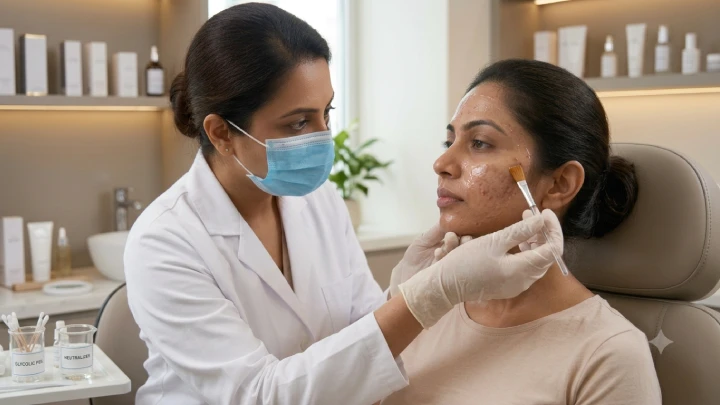


Acne-prone skin is one of the skin types that can be hard to manage with non-prescription skincare products. It needs personalized, professional care and treatment. For those considering chemical peel treatment in Bangalore, consulting an experienced dermatologist can help determine the most suitable peel for your skin type and concerns.
As a first-time tester of chemical peels, it’s obvious for you to ask: “Are peels safe for acne-prone skin?”
Well, there are mixed opinions about chemical peels for acne-prone skin. Some patients confidently rely on it for clearer skin, while others constantly worry about experiencing high skin sensitivity, skin barrier damage, or worsening breakouts. The point is not all peels are safe and effective for every skin condition or acne.
This article provides expert-backed answers to the most frequently asked questions about chemical peels for acne-prone skin. It encourages you to see our expert to assess the suitability of chemical peeling and explore the right chemical peel treatment in Bangalore for your skin concerns.
What are Chemical Peels?
Chemical peels are specially formulated, skin-exfoliating acids that can help decongest pores and promote skin renewal. They are of different types, varying in strengths: mild to deep. A dermatologist selects one based on the skin concern and skin type.
Are Peels Safe for Acne-Prone Skin?
Generally, chemical peels are safe for acne-prone skin, provided the treatment is customized and performed by a licensed, experienced dermatologist.
Dermatologists offer chemical peel treatment for:
- Creating a skin environment unfavorable for bacterial growth
- Treating post-acne marks/ post-inflammatory hyperpigmentation
- Reducing skin’s oiliness and inflammation
- Controlling active acne breakouts
- Minimizing comedones
- Fading acne scars
- Facilitating the skin cell turnover
- Refining congested pores
- Improving the overall skin texture.
The safety of chemical peel treatments for acne-prone skin relies mainly on the right choice of peel, peel concentration, and frequency of use. A dermatologist customizes the treatment plan based on skin type, skin sensitivity level, and targeted acne severity or associated concerns to avoid irritation, redness, or pigmentation.
Which Peel is Usually Recommended for Acne-Prone Skin?
The safe and effective peels for acne-prone skin are generally:
- Glycolic acid peel: It is best for mild acne breakouts and superficial post-acne marks, as it helps remove only the topmost skin layers to clear, brighten, and smooth the skin.
- Salicylic acid peel: It is a medium peel that can effectively penetrate congested pores to remove dead skin cells. It can control sebum production, reduce comedones, and prevent future acne flare-ups.
- Mandelic acid peel: It is best for gentle exfoliation of sensitive and dark-skin. It can reduce inflammation and treat active acne, and fade post-acne marks with a lower risk of irritation.
- Combination peels: The acid solutions can also be mixed by a dermatologist for treating active acne, oily skin, acne marks, and mild acne scars.
Which Peels are Unsafe for Acne-Prone Skin?
Individuals with acne-prone skin must avoid the deep peels, specifically TCA cross-linking. Such strong peel on active acne can cause permanent skin discoloration or scarring.
Can Chemical Peeling Worsen Acne?
No.
Following the first chemical peeling session, the skin’s reaction to the peel can be confused with real acne breakouts.
Normally, the clogged pores come to the surface, resulting in the short-lived appearance of small bumps. The following week after treatment, the skin clears.
Consulting a dermatologist about this can help determine whether the acne breakout after chemical peeling is normal.
Can Peels Work for Acne Scars and Post-Acne Marks?
The Short Answer: Yes
Chemical peeling is safe and effective for:
- Post-inflammatory hyperpigmentation/ post-acne marks
- Mild acne scars or skin textural irregularities
- Uneven skin tone.
For severe cases, peels must be combined with other dermatological procedures, such as microneedling, subcision, and laser treatment.
How Many Sessions of Chemical Peeling are typically recommended?
The exact count of sessions is determined by a dermatologist, depending on the targeted concern. Usually, the sessions are scheduled every 2-4 weeks for optimal results.
Here are the typical recommendations for chemical peeling:
- Active acne- 4 to 6 sessions
- Oil control and pores decongestion- 3 to 6 sessions
- Post-acne marks- 4 to 8 sessions
- Superficial acne scars- more than 6 sessions or combinations, advanced treatment.
Is Chemical Peel Treatment Painful?
On acne-prone skin, usually mild to medium peels are used, which cause a mild warmth, tingling, or stinging sensation for a few minutes. Thus, the sessions are tolerable.
Who Can Opt for Chemical Peels on Acne-Prone Skin?
Chemical peels are generally suitable for any healthy adult having:
- Open and closed comedones- the blackheads and whiteheads
- Early to moderate acne breakouts
- Oily skin
- Rough and dull skin
- Enlarged pores
- Post-acne marks
- Realistic expectations
- A commitment to good skincare and a healthy lifestyle.
Chemical peels are generally not safe for those with active skin infections, serious skin conditions, severe skin sensitivity, or open wounds.
What to Expect After Chemical Peeling of Acne-Prone Skin?
Following the treatment session, it is normally expected to experience:
- Slight tightness, redness, and dryness of the treated skin for 1-3 days
- Little peeling or flaking of the treated skin, and smoother skin by the end of the first week of recovery
- Less oily skin, fewer acne flare-ups, brighter complexion, and clearer, smoother skin from the second week onwards.
How to Ensure Safety and Effectiveness of Peels for Acne-Prone Skin?
Proper post-treatment care is essential for supporting the healing of chemical peel-treated skin and achieving the best possible outcomes.
So, follow these dermatologist-recommended aftercare instructions for chemical peel treatment:
- Cleanse the skin with a mild cleanser, then apply the soothing moisturizer.
- Daily wear, dermatologist-recommended sunscreen.
- Do not pick, rub, or scrub the treated skin.
Cost of Chemical Peel Treatment in Bangalore
The cost of chemical peel treatment in Bangalore generally ranges from ₹2,000 to ₹10,000 per session. Multiple sessions may be recommended to achieve optimal results.
The cost range will also vary based on the following factors like:
- Type and strength of the chemical peel
- Severity of concern
- Number of sessions
- Doctor's expertise
- Clinic location
- Combination with other acne treatments, and more.
Conclusion
Chemical peels can be safe and effective in managing acne-prone skin when used by an expert dermatologist on a suitable candidate. They work best for active acne, skin oiliness, rough skin, enlarged pores, post-acne marks, and even mild acne scars.
If considering chemical peels for your acne-prone skin, don’t try at-home peels; consult our dermatologist Dr. Rasya Dixit.
To get a personal evaluation and receive the best-suited chemical peel treatment in Bangalore to achieve clear, high-quality skin.
Real Patient Happy Results
Happy Testimonials
Meet us At
FAQs on Chemical Peels for Acne-Prone Skin
Can chemical peels help get rid of acne?
Chemical peels are just a part of the comprehensive acne management plan. These can control breakouts and keep skin clear and healthy, but can’t help eliminate the problem of acne breakouts.
Is a chemical peel for acne-prone skin safe for sensitive skin?
Yes, some peels like mandelic acid peel are specially designed for sensitive, acne-prone skin.
Is a chemical peel for acne-prone skin safe for dark skin?
Yes, but with limitations. Dark-skinned people can only safely undergo a superficial acid peel treatment with an experienced skin professional.
Can a teenager with acne-prone skin consider chemical peel treatment?
Yes, if it's recommended and supervised by a certified, experienced dermatologist.
Will skin peeling be visible after every chemical peel treatment session?
It is not necessary. Modern chemical peels often provide minimal, noticeable skin peeling.

 29-07-2026