- Medically Reviewed by Dr. Rasya Dixit
- |
 Published on
Nov 12, 2026
When Should You See a Dermatologist for a Skin Problem Instead of Treating It at Home?


Occasional, mild skin dryness, one or two acne breakouts, or slight temporary redness may not always need a dermatologist's attention. Most minor skin problems can resolve over time with a consistent, simple, gentle skincare routine, including sun protection, regular moisturization, and healthy lifestyle habits.
But when skin suddenly looks or feels unusual, or a specific skin problem persists, worsens, or keeps returning, at-home skincare, DIY options, or over-the-counter remedies alone won’t help. Many skin problems have overlapping symptoms but different causes. Because the causes differ, they require different treatment approaches. In such cases, seeking a dermatologist's help is essential. In such cases, seeking a dermatologist in Bangalore is essential.
Consulting a dermatologist can help prevent delayed diagnosis and unnecessary, inappropriate, or delayed treatment that may worsen the skin condition or cause recurrence.
Quick Glimpse
A dermatologist visit is needed in the following cases:
- Persistent itchy, cracked, or painful skin
- Stubborn, painful, recurring, or severe acne breakouts that leave marks/scars
- Persistent, spreading, or recurrent skin rash
- Extreme, unexplained, or persistent itching
- Recurring, unexplained, or worsening dark spots/patches
- Swelling, redness, pain, or pus discharge accompanied by fever
- New or changing moles or skin growths.
When Can You Treat Your Skin Problem at Home?
At-home care can work for superficial, familiar skin concerns that aren't spreading, worsening, or recurring.
Skin problems that can be treated at home usually include:
- Mild skin dryness/dullness
- Occasional, mild acne breakouts
- Minor, temporary skin irritation
- For such cases, dermatologists recommend a basic, gentle skincare routine, which includes:
- Mild cleanser
- Suitable moisturiser
- Broad-spectrum sunscreen
- Any prescribed, targeted skincare product.
When Do You Need a Dermatologist Consultation for a Skin Problem?
Here are the signs that indicate your skin needs to be evaluated by a dermatologist:
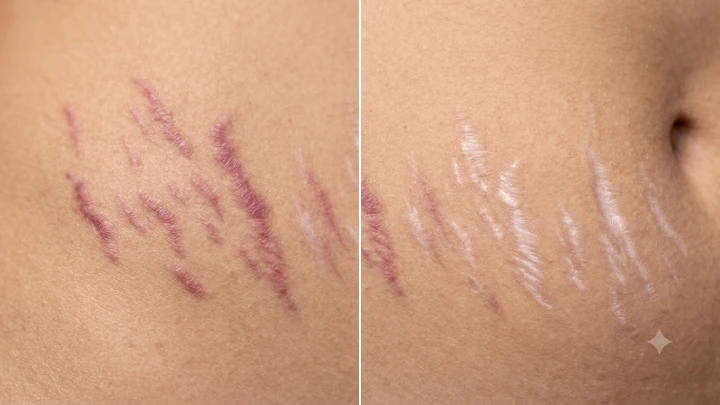
- Stubborn acne and its scars: Acne breakouts that are sudden, severe/deep/widespread; painful; keep returning; leave dark marks, scars, or uneven texture; affect appearance and confidence; and cannot be controlled with store-bought products.
- Persistent skin rash: An irritation/itching, or rash that lasts more than 2 weeks, recurs, spreads, or covers more than 10% of the body. May cause discomfort, develop blisters, produce discharge, be associated with swelling, appear as a reaction to a new product or medicine, and not improve with at-home skincare.
- Pigmentation issues: Unexplained, persistent, widespread, rapidly changing, or recurring dark spots/patches.
- Dryness or Scaling: Chronic skin dryness presenting as cracked skin, bleeding skin, or skin that doesn’t respond to regular moisturizer.
- Moles or Lesions: Sudden appearance of moles/skin growths, or visible changes in their shape, size, border, or color. May be associated with persistent itching and repeated crusting.
- Skin Aging: Fine lines, early wrinkles, uneven skin tone, loss of skin firmness and elasticity, pigmentation, under-eye concerns, sun damage, facial volume loss, and skin laxity that appear early in life and affect appearance and confidence.
- Systemic Symptoms: Skin changes accompanied by fever, joint aches, or difficulty sleeping.
When a Skin Problem Needs Urgent Medical Care?
A routine dermatology appointment will be too late for such serious or life-threatening symptoms:
- Troubled breathing after using any cosmetic skin product
- Severe skin allergic reaction
- Rapidly spreading painful, red rash
- Extensive skin peeling or blistering
- Extreme skin infections
- Significant swelling around the face or eyes after using any creams
- A rapidly worsening skin problem accompanied by systemic symptoms.
How Does a Dermatologist Help with Your Skin Problem?
During a professional skin consultation, a dermatologist:
- Reviews medical history: A dermatologist asks about symptom onset and duration, what makes symptoms better or worse, allergies, previous skin conditions and treatments, family history, lifestyle, current skincare, medications, and hormonal or medical history.
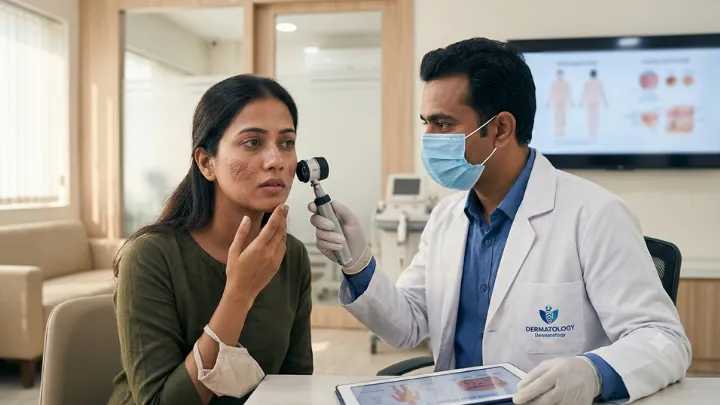
- Perform skin or scalp examination: A dermatologist closely examines the affected area to identify patterns that may help with the diagnosis.
- Prescribe or run diagnostic tests (if required): A dermatologist may order additional investigations like allergy testing, blood tests, fungal testing, dermoscopy, skin scraping, or skin biopsy.
- Personalize the treatment plan: Based on the skin problem, its cause, and severity, a dermatologist recommends one or more suitable treatments, proper skincare, and schedules follow-up monitoring.
Why See a Dermatologist Early?
Scheduling an early visit to a dermatologist can help:
- Identify the accurate skin problem.
- Prevent use of unnecessary products.
- Prevent marks or scarring.
- Prevent worsening pigmentation.
- Control recurring skin conditions like acne breakouts.
- Help manage skin inflammation with initial diagnosis and treatment.
- Ensure an appropriate, long-term skin treatment plan.
Final Takeaway
Not every skin problem needs a dermatologist. But severe, persistent, worsening, or recurring skin problems can never be addressed with random at-home treatments. If you notice anything unusual with your skin suddenly, or if it lasts more than 2 weeks and worsens or keeps returning, a dermatologist can accurately identify the problem, its cause, and its severity, and provide appropriate treatment. They can also provide the best skincare guidance and after-treatment support.
Whether you are dealing with acne, fungal infection, dark lips, pigmentation, under eye bags, unexplained rashes, or recurring skin irritation, timely dermatological care can help address the underlying cause and prevent further complications.
Consult now with Dr. Rasya Dixit, dermatologist in Bangalore for proper diagnosis and personalised treatment plan. She can help one with their dermatological concern and achieve a healthy skin with her knowledge, expertise and skills.
FAQs on Professional Help Vs. Home Treatment for Skin Issues
Can every skin problem be treated at home?
No. Mild, temporary skin problems may improve with a basic at-home skincare routine. For severe, recurring, unexplained, worsening, or persistent skin problems, see a dermatologist for proper assessment and the right treatment.
How long should I wait before seeing a dermatologist for my skin problem?
There is no fixed waiting time. If the skin problem is spreading, painful, extremely uncomfortable, or very bothersome, seek an evaluation from a dermatologist.
Can home remedies worsen skin problems?
Yes, they can, because they may be harsh or irritating and can cause inflammation and pigmentation.
What if my skincare routine is worsening my skin problem?
See a dermatologist for a tailored skincare routine, as an inappropriate or overly aggressive routine can worsen the problem. A dermatologist can help identify which skincare products are irritating and which to stop, introduce gradually, or continue.
When to see a dermatologist for skin problems after a cosmetic procedure?
Slight redness, peeling, sensitivity, or swelling is usually expected after cosmetic procedures that intentionally injure the skin. But if you have significant pain or discomfort, severe swelling, blistering, pus or discharge, spreading redness, fever, or worsening symptoms, these are not signs of normal recovery, and you should notify a dermatologist.


 05-11-2026