- Medically Reviewed by Dr. Rasya Dixit
- |
 Published on
Nov 02, 2026
Red vs White Stretch Marks: What Is the Difference?
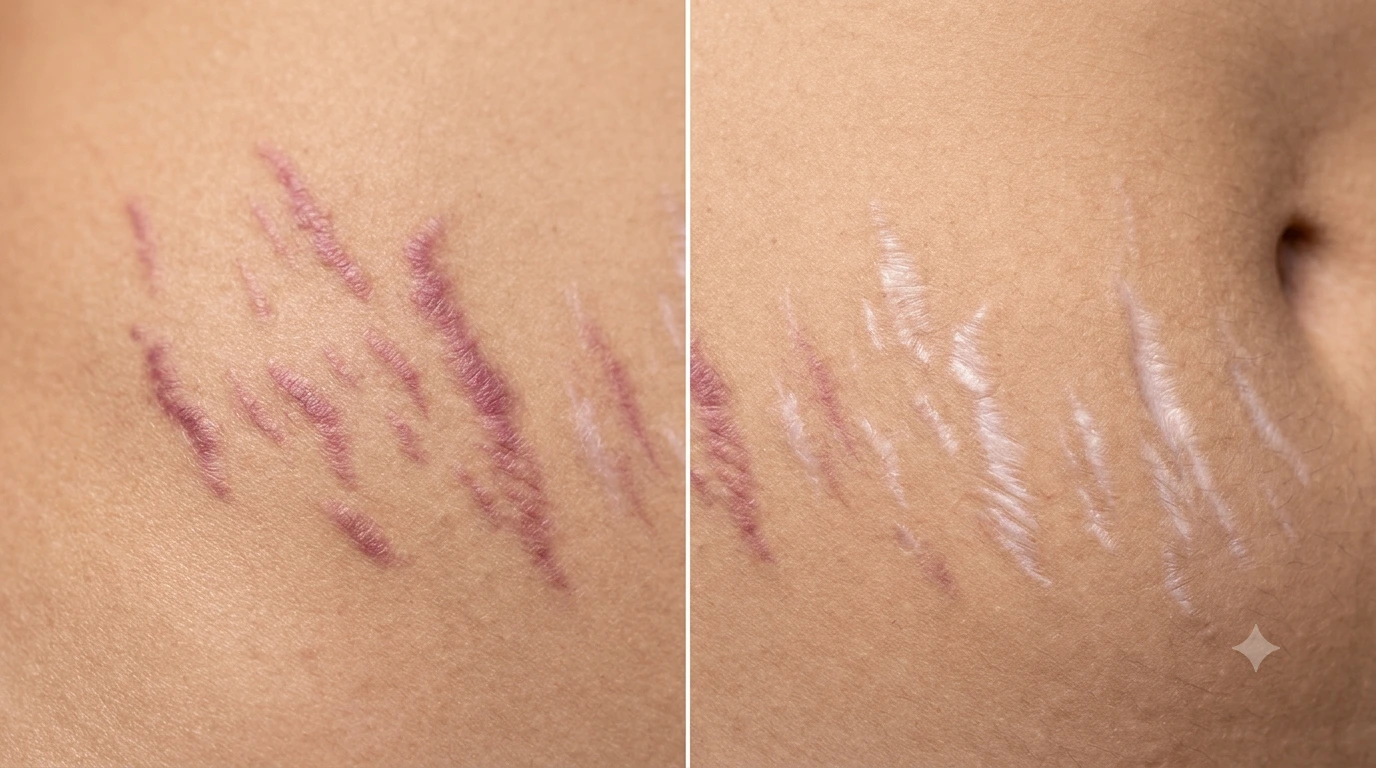


Stretch marks vary from person to person, depending on when they start, how long they last, and the individual’s skin tone. People who develop stretch marks for the first time notice red, pink, purple, or slightly raised marks, while those who have had stretch marks for years notice white, silver, or pale marks. Dr. Rasya Dixit at Dr. Dixit Cosmetic Dermatology Clinic, Bangalore, can help you understand the difference between newer and older stretch marks and explore suitable treatment options.
If you have recently developed stretch marks on your bre-asts, thighs, abdomen, arms, hips, or other areas, you might wonder whether they will naturally fade. If your stretch marks have matured, you might wonder whether you can erase them. Well, how stretch marks fade depends on how old they are and how you treat them.
Understanding early, red stretch marks and mature, white stretch marks can help you choose an appropriate skin treatment and set realistic expectations for improvement.
Quick Glimpse
- Newer stretch marks: Red, pink, or purple, often slightly raised.
- Older stretch marks: White, silver, or pale, often depressed.
- Better, early treatment response: Red stretch marks.
- Treatments for red stretch marks reduce color and prevent progression.
- Treatments for white stretch marks improve texture and reduce visibility.
- Stretch marks are non-erasable; you can only make them less visible.
What Are Stretch Marks?
Stretch marks are permanent scars that develop rapidly when the skin’s connective tissue is stretched beyond its limit. Usually, they appear after pregnancy, sudden, rapid weight gain/loss, puberty and growth spurts, muscle growth, certain medical conditions, or prolonged/inappropriate use of corticosteroids. They are harmless and result from changes in collagen and elastin in the skin.
Based on how long they are present or their stage, stretch marks are of the following two types:
- Red stretch marks (striae rubrae)
- White stretch marks (striae alba)
Red vs White Stretch Marks: Main Differences Discussed
Why Do They Look Different?
The reason is the stage of development.
Red stretch marks are newer, usually less than a year old. In contrast, white stretch marks are later-stage; the red marks fade over months or years.
Relatively fresh stretch marks are colored because more noticeable underlying blood vessels show through the thinned skin during the inflammatory and skin-remodeling phase. Depending on the individual’s skin tone, they may appear pink, purple, red, or reddish brown. In some people, they may appear or feel slightly raised or different from the surrounding skin.
As these stretch marks age, they lose color because constriction and narrowing of underlying blood vessels leave dense scar tissue. Depending on how old/mature the stretch marks are and the individual’s skin tone, they can appear white, silver, pale, or skin-colored. They are often slightly depressed compared to the surrounding skin because of collagen loss and pigmentation changes.
Which Can Fade Over Time?
Red stretch marks can gradually fade over time, but timelines vary from person to person. Color may change from red/pink to purple/brown, then to pale, and finally to white/silver. White stretch marks can't fade further; they are the final stage of development, fully matured marks.
Which One Is Easier to Treat?
Usually, the newer, red stretch marks may respond better to treatment than older, white stretch marks. That’s because the skin has more vascular and inflammatory changes that certain treatments can target.
However, this doesn't mean white stretch marks aren't treatable. They can be treated, but it’s challenging because of low blood flow.
How Are They Treated?
Treatment options for red and white stretch marks vary based on their stage and appearance.
The goal for red stretch marks is to reduce the color and prevent progression. For white stretch marks, treatment aims to improve skin texture, reduce depressions, reduce color contrast, and support natural collagen remodeling.
For newer, red stretch marks, dermatologists generally recommend:
- Topical therapies: In selected cases, certain prescription retinoid creams may be considered for fresh stretch marks.
- Laser treatment: If topicals don't help, a dermatologist may recommend thermal destruction of visible blood vessels with an appropriate laser to reduce skin redness. In some cases, fractional lasers are recommended to stimulate collagen remodeling and improve the appearance and texture of stretch marks.
- Microneedling: This treatment is preferred for some patients. It works by creating controlled micro-injuries that stimulate the skin’s natural wound-healing response and collagen production.
For the older, white stretch marks, dermatologists generally recommend:
- Microneedling with or without radiofrequency: Microneedling creates controlled micro-injuries that stimulate the skin’s natural wound-healing response and collagen production. It can help improve the depressed appearance of white stretch marks. In some patients, microneedling is paired with radiofrequency to promote deeper collagen remodeling, improve skin texture, and tighten the skin.
- Fractional laser resurfacing: Another treatment that promotes fresh collagen production and improves skin texture.
- Combination treatments: If a single treatment isn't helping, dermatologists may combine technologies based on the stretch mark's depth, color, and location, as well as the individual’s skin type.
Final Takeaway
Red and white stretch marks differ in their stage of development and appearance. Red stretch marks are newer and respond well to most treatments, including certain topicals. If they aren't addressed early or appropriately, they can mature into white or silver stretch marks, which are harder to improve. However, the mature stretch marks can improve with procedures that stimulate collagen remodeling. Stretch marks appearance may improve with appropriate treatment.
A dermatologist can help identify the stage of stretch marks and recommend treatment suited to the individual’s skin type and expectations.
Looking for Stretch Mark Treatment in Bangalore?
If your stretch marks concern you, consult a qualified dermatologist in Bangalore Dr. Raysa Dixit at Dr. Dixit Cosmetic Dermatology Clinic for an assessment. As per Dr. Rasya Dixit the right treatment depends on whether your stretch marks are new or mature, their depth, your skin type, and your desired results.
A personalised treatment plan can help improve their appearance and offer visible improvement. Visit the clinic for details.
FAQs on Stretch Marks Treatment
Can red stretch marks be prevented from becoming white?
No approach can guarantee preventing stretch marks from maturing. Protecting your skin with the right, consistent skincare routine and seeking early treatment may help improve the appearance of stretch marks before they become more established.
What is stretch marks treatment cost in Bangalore?
Stretch marks treatment Cost in Bangalore typically range from Rs. 3,000 to 30,000 per session. This can vary from patient to patient. Consult a dermatologist for details.
Can over-the-counter creams remove white stretch marks?
No. Moisturizers or stretch mark removal creams can improve skin quality, but they can't completely rebuild mature scar tissue. For prominent or bothersome white stretch marks, professional skin treatments can improve them more than creams.
Are all stretch marks permanent?
Stretch marks are permanent changes in the skin. Early, red stretch marks can become less noticeable over time, but white stretch marks can remain visible for years and may improve with appropriate professional treatment.
When to see a dermatologist for stretch marks?
Consult when stretch marks appear suddenly or extensively, develop without an obvious explanation, result from corticosteroid exposure, affect confidence, or require professional treatment to improve appearance.
How can the risk of stretch marks be reduced?
Stretch marks are not always preventable, as genetics and hormonal factors play a role. But with a gentle skincare routine, a healthy lifestyle, and avoiding unnecessary corticosteroids, you may prevent stretch marks from forming.


 27-10-2026